Ornithology Home Page
Bulletin Board
Lecture Slides
Bird List

Ornithology Bulletin Board
Announcements, instructions, and mark will be posted on this web-based bulletin board during the course.  Visit this page frequently for announcements made during the course!

FINAL EXAM

Our final exam is Saturday December 10 at 12:00 noon in TC 104.

Posted December 5, 2011


FEEDBACK ON ASSIGNMENT 2

Marks for assignment 2 will be available on CLEW shortly. Comments on the content and the style of your article are now available here.

Posted December 5, 2011


MARKS AVAILABLE THROUGH CLEW

You should be able to view all of your marks to date through CLEW. There was an error in my recording of assignment 1 marks on the CLEW site.  I have now fixed the errors.

Updated December 5, 2011


READING FOR NEXT WEEK'S LAB

Labs on November 14, 15, and 16 are focused on studying feathers. Please read the lab instructions (click here) ahead of the lab.  We will have blank copies of the three pages at the end of this document for you to fill out during the lab, and submit to the GAs at the end of the lab.

Please bring the following to the lab:
(1) Your field guide.
(2) Something to write with. You will have to sketch, so bring a pencil and a good eraser.
(3) A laptop computer (if possible)
(4) If you have one, please bring forceps from your dissection kit (or even the whole dissection kit).

Posted November 11, 2011


ASSIGNMENT 2

Assignment 2 (writing a popular science article) is due on Thursday November 10, 2011 by 10:00 am sharp (the start of class).

Here is the assignment: click here.

Posted November 1, 2011


READING FOR NEXT WEEK'S LAB

Labs resume on October 31. For labs on Mon Oct 31, Tues Nov 1, and Wed Nov 2. We will start the lab with QUIZ 2.  Don't forget that Quiz 2 is cumulative, and it covers the first 66 species, as indicated on the "Bird List" link above.

Important: For the second part of the lab on Oct 31, Nov 1 and Nov 2, you must read this document (click to download):
"Female Eavesdropping on Male Song Contests in Songbirds"
The document contains a one-page scientific paper that I published in 2002. On pages 2 through 5 there are three articles from the popular press about the scientific paper. You should arrive at the lab having read all five pages and ready to engage in a discussion. Be ready to talk about which of the popular press articles is the best; which one made some mistakes; which one made the research most easy to understand; which one drew connections to other studies, etc.

This second part of lab will introduce you to the upcoming assignment, where you will write a popular science article based on an article of your choice.  The details of that assignment will be announced here, next week.

Posted October 27, 2011


MIDTERM EXAM

The midterm exam is this Thursday, October 19, from 10:00-11:20. We will write the exam in two rooms on the third floor of Dillon Hall.
    Dillon Room 361: Agimal to Lynn
    Dillon Room 367: Mallette to Weinz
Please bring a pen and your student card. No hats or tinted glasses are allowed.  Please come early, because arrive on time; the exam will last from exactly 10:00 to 11:20.

If you are sick, please look after your health, and see a doctor. Bring me a doctor's note as soon as you return to class.

Posted October 17, 2011


ASSIGNMENT 1

Assignment 1 (writing a scientific abstract) is due on Thursday October 13, 2011 by 10:00 am sharp (the start of class).

Here is the assignment: click here.

Here is the scientific paper: click here*.

* By downloading this paper you agree to abide by the rules that Dr. Mennill explained in class on Tuesday October 4.

Posted October 4, 2011


READING FOR NEXT WEEK'S LAB

For labs on October 3, 4, and 5 we will discuss a scientific paper.  Ahead of the lab, you must read this paper (click to download):
"How Robins Find Works" by Bob Montgomerie and Patrick Weatherhead
You should arrive at the lab having read this article and ready to engage in a discussion of what parts you liked / didn't like and what parts you understood / didn't understand. We will then present the assignment which is due on Thursday October 13 at 10:00 am.

Posted September 28, 2011


SATURDAY SEPTEMBER 24 FIELD TRIP

This Saturday is our field trip to Point Pelee National Park and Holiday Beach! At 6:00 am, all students must board the busses on Sunset Avenue near the Biology Building.  You should have already eaten breakfast. Don't be late!

The following items are required:
1. Binoculars (bring any binoculars you can find, so we have enough)
2. Field Guide and a Pencil
3. Clothes: Wear layers, including a rain coat / wind breaker
(it will be chilly early in the morning)
4. Hat for sun + rain protection
5. A small umbrella
(in case of rain)
5. Lunch and snacks (there is no chance to buy food en route!)
6. Camera  (optional)
7. Leave cellphones at home (or keep it turned off during the trip)

We will return to Sunset Ave at approximately 5:00 pm.

Posted September 22, 2011


BINOCULAR DEAL

If you want to take part in the Eagle Optics Binocular Deal, have your cash or cheque ready for me at the end of Thursday's class. This is a one-time-only offer. Links are here and here.

Posted 2011 Sept 13


PURCHASING A FIELD GUIDE

There are many great field guides to the birds of North America. All students in this course must have a field guide. Which one you use is up to you. Note: If you already own a field guide to the birds of North America or eastern North America, you do not need to purchase one of these books.  Simply bring your book to the first lab and the GA's and I will assess if it is appropriate.

Recommendations:

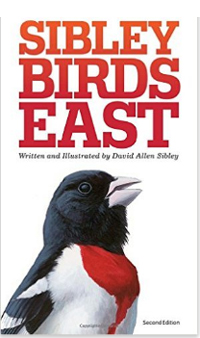
1. The Sibley Field Guide to Birds of Eastern North America. This book covers only birds of eastern North America. The plates are the same excellent plates as in "The Sibley Guide to Birds" (see below) but it is much smaller and fits in your pocket. Price is typically around $21. This is the book I use when I am birdwatching in Ontario. I have asked the University Book Store to order copies of this book. 

2. The Sibley Guide to Birds. This book covers all birds in North America. The plates are amazing and depict each bird in several different plumages and poses. The only downside to this book, if there is one, is that it is larger than the average field guide and doesn't fit in your pocket. Price is typically $31.

3. National Geographic Field Guide to the Birds of North America. This book covers all birds in North America and is relatively small. The plates are very good. Price is typically $25.

4. The Peterson Field Guide to the Birds of Eastern and Central North America. This is the classic bird field guide and is still favoured by many ornithologists and birders.  It is a pocket sized book, like books 1 and 3 above, and the plates are very good. Price is typically $28.

Posted August 2011


PURCHASING BINOCULARS

Binoculars are relatively inexpensive and they will provide you with a lifetime of enjoyment. For less than a price of the average university textbook, you can purcahse equipment that will make you happy for decades! Binoculars will be an important tool for this course during our birding trips, including walking trips to the Detroit River, our lab trips to Objiway Prairie Conservation Preserve, and our weekend trip to Holiday Beach and Point Pelee. Note that you are not required to purchase binoculars for this course, but it is highly recommended.

Special note: I will make a special announcement about a binocular deal during class on the first day of classes!

Where to buy binoculars:

There are many places to buy binoculars (see a brief list below). The best prices on binocluars can often be found online. Eagle Optics is a very reputable company which sells both their own brand of binoculars (which come with a completely amazing lifetime warranty) as well as most other brands of binoculars.

Before you buy, many people think it is a good idea to try out several different pairs and find out which pair "feels" the best in your hands. We have one of Canada's best retailers for binoculars, Pelee Wings Nature Store, within easy driving distance en route to Point Pelee. To get their best prices, ask to speak to the owner, Michael, and tell him that you are a student of ornithology at the University of Windsor.

What to look for in binocluars:

When browsing for binoculars you will see two numbers, for example 7x42 or 8X50. The first number refers to the magnification power of the binoculars: A pair of 7x42 binoculars will magnify images 7 times and a pair of 8x50 binoculars will magnify images 8 times. The second number is the width of the objective lens: a larger lens will let in more light and make birds easier to see. You can learn all about binoculars at Eagle Optics "All About Optics" site.

Avoid binoculars with less than 7 times magnification or more than 10 times magnification. The most common choice may be 8 times magnification, but 7 times or 9 times or 10 times magnification are also appropriate.

Avoid "auto-focus" binoculars.  It is important for you to be able to focus the binoculars using a focus knob. So called "auto-focus" binoculars provide you with very little control over your ability to see things.

Note that the least expensive binoculars (sometimes called "pocket binoculars"), which can often be purchased for as little as $30 or $40, are a waste of your money. They will be frustrating when you are learining to watch birds, and the won't last long.  For a little bit more money, you can buy "compact binoculars" which may cost between $40 and $100, which will likely last you for longer, although they won't likely survive getting wet.  For just a little bit more money (if you are willing to spend $100) you can purchase waterproof binoculars, which could last you a lifetime. The great thing about waterproof binoculars is that yo don't have to worry if it rains on them, and they will allow you to go birdwatching anywhere in the world, including the steamy tropics.

Possible places to shop for binoculars:
Pelee Wings Nature Store
Eagle Optics Canada
Eagle Optics USA
B&H Photo Video
Local camera stores and nature stores

Posted August 2011

All content copyright D. J. Mennill