12
view . spring 2012
As the director of fundraising for the organization, she felt she
couldn’t fulfill her position without a solid understanding of the
needs of this community and decided to travel there herself.
She left on April 18, 2011 for a two-month trip, but things did not
start off well. Murray and her companion, a journalist, were stuck
in Uganda for days, hoping to catch a flight to the Congo. When
the pair could not secure one, they finally took an overnight bus,
intending to eventually cross the Uganda-Congo border by foot. A
border guard, however, had other plans.
“The guard would not let my friend go until he paid $250
for having the wrong signature on his visa,” says Murray. If you
are going to a dangerous
place, it’s helpful to have
connections there. “We
didn’t end up paying. We
called a friend, who called a
friend, and suddenly,
they were waving us
along our way.”
Murray spent just
under three weeks meeting
with children, parents, and
community leaders in the
rural mountain village
that has a population of
about 6,000.
“The most predominant
image I have is of young
children and women heading
to market, always carrying
huge loads on their heads.
I saw elderly women who
have been doing this their
whole lives, bent literally in
half. They were the hardest working women I’ve ever met.”
During the trip, Kujali Congo conducted a community needs
assessment to determine where best to invest some of the funds
that Murray has successfully secured.
“We wanted to give micro loans to support community based
projects that will eventually raise funds on their own,” she says.
Kujali Congo worked with a group of leaders on the ground to
distribute funds to the community’s three elementary schools.
One project that received support was the Effort d’engardrement
jeunesse (effort to protect children). It used Kujali Congo funding
to purchase high-quality seed for local families to plant. With the
revenue raised by selling the crops, the families were able to pay the
money back and keep the surplus. The repaid funds went into an
education fund for the community.
Murray says it is important for the group’s donors to feel a sense
of connection with the projects they are supporting.
“A lot of organizations just ask for the money and the donor
feels no connection and sense of participation,” she says. Part
of her current academic research focuses on empowerment and
disempowerment in fundraising. “When the donor feels connected
to what they are supporting, they are more likely to continue,”
she notes. “We want to provide donors with the stories of how
their funds are making a difference. So one thing we did was to
videotape a class which is being funded by one large donation for
an entire year.” They also created a database with photos of all the
children in the schools, their interests, and what their needs are, to
encourage further donations.
Currently, Kujali Congo is made up of a core group of eight
individuals. It is working with the Rotary Club of Essex to get off
the ground, and is hoping to attract leadership-minded individuals
to take up its cause. “I
would like to finish up my
degree,” says Murray. “So I
want to make sure we have
people in place who can
continue the work there.”
Eventually, she would
like to pursue a career in
international development,
and perhaps work with
settlement agencies
in Canada, assisting
immigrants with their
transition to their new
country. Her experience
working with Kujali Congo
will provide an invaluable
foundation in finding
solutions for those who are
willing to help and invest in
themselves.
“We are a unique
organization. We believe in
sustainable development, empowerment, and promoting images of
hope – not despair.”
n
v
For more information about Kujali Congo or
how you can help, please contact Katelyn
Murray at kujalicongofundraising
@
gmail.com
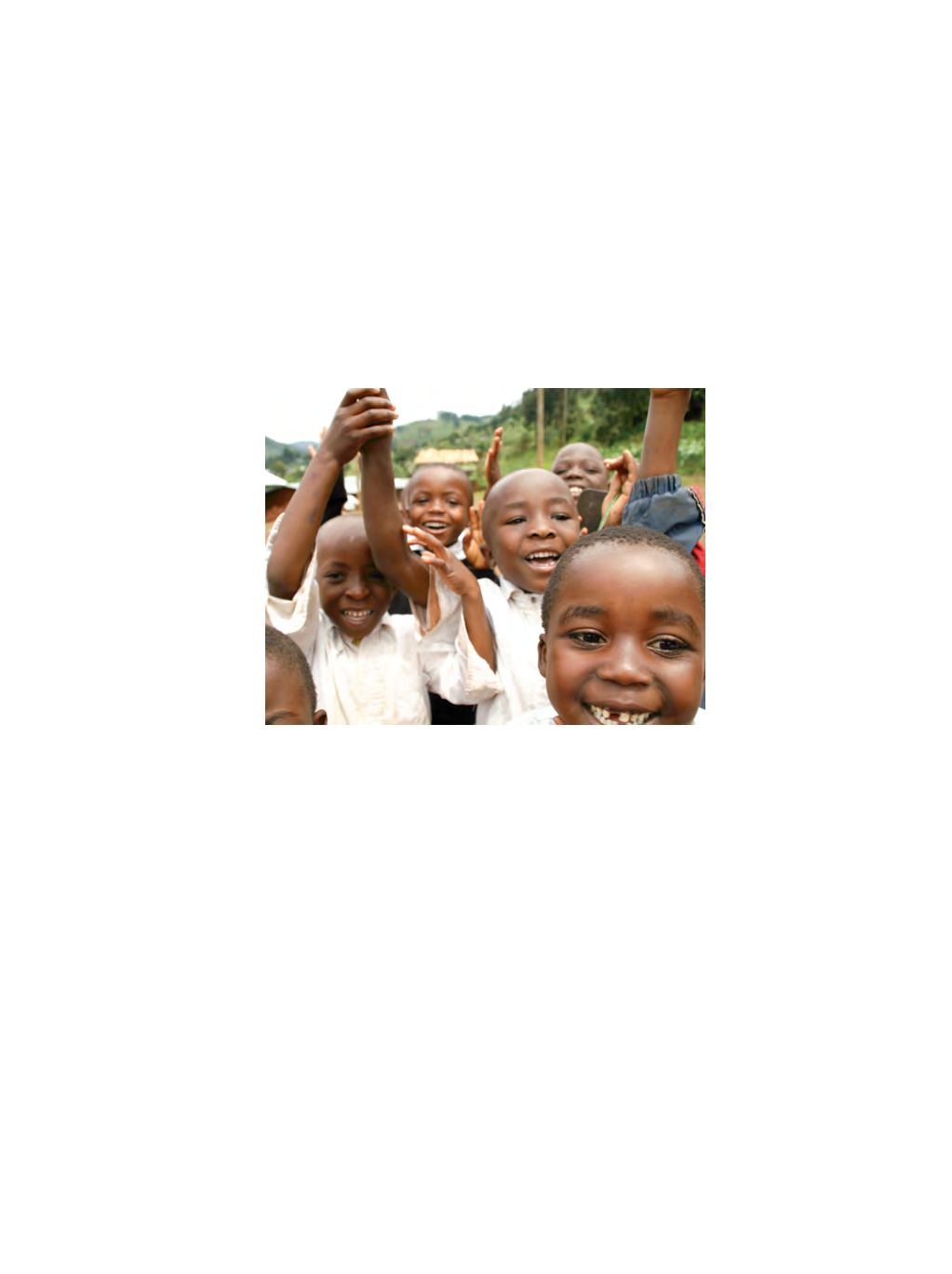
Kujali Congo wants its donors to feel connected with those who benefit.


