12
view . spring 2010
The University of Windsor has invested significantly in
creating a more sustainable physical environment, and in
fact, has been recognized for its various achievements in
the area of sustainability, says Dennis Hastings, executive
director of Facility Services.
The Ontario Power Authority, a non-profit corporation
established by the provincial government to ensure
Ontario’s electricity supply, has cited UWindsor as an
example for other institutions in a case study entitled,
“Continuous energy-efficiency projects across the
University of Windsor campus reduce electricity usage.”
Among the examples the study cites, is the University’s
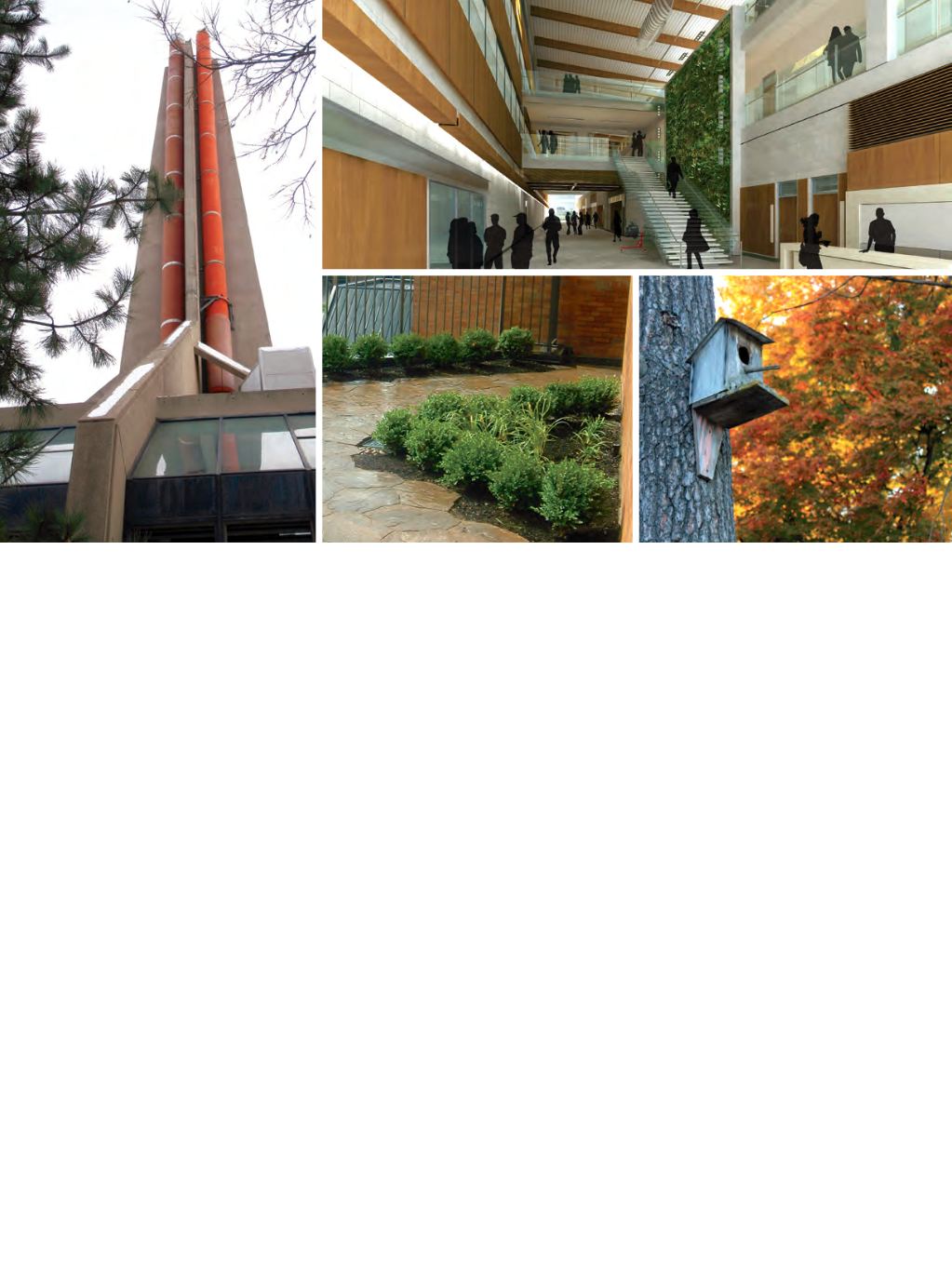
“cogeneration plant,” established over 15 years ago. “It’s
basically an airplane engine that runs on natural gas, says
Hastings. “It is a very efficient energy process, changing
natural gas to supply both electricity and steam,” reducing
energy usage on campus during both the heating and
cooling seasons.
Campus upgrades recently completed include boiler
controls and the conversion of lighting to natural light or
more energy efficient bulbs.
Green Buildings
On a much larger scale, the design of the coming Centre
for Engineering Innovation (CEI) building meets Gold
LEED (Leadership in Energy and Environmental Design)
standards. LEED is a nationally recognized standard for
design, construction and operation of high-performance
green buildings.
Both the engineering, and the medical education
building that was completed in fall 2008, were designed in
keeping with LEED requirements. The LEED point system
determines whether a structure qualifies, says Hastings,
encouraging “clients to consider energy efficiencies in
building and sustainable product development.”
CEI will be a “living and learning” building and the
largest certified Gold LEED building in the region, with
low-energy lighting systems, as well as glass and solar
active systems for advanced lighting control. Tentative
plans call for for a green roof to collect and filter rain water,
and a constant monitoring of air quality and heating.
Such creative project design has allowed the University
to add four buildings to campus over the past six years
without a significant increase in overall energy use,
says Hastings.
For example, the new Medical Education building
has a stunning “green wall,” that uses recycled water and
improves air quality via a massive, two-storey wall of
vegetation.
Several older buildings have undergone a similar
green upgrades, the law building now boasts 2,600 square
feet of garden terraces on the first and second floors
that are energy-efficient. These multi-purpose terraces
supply waterproofing, insulation, and regional plant-
life, encouraging wildlife habitat and forage. Beyond the
aesthetic appeal is real innovation. The garden roof will
last twice as long; reducing maintenance costs, and the
1. UWindsor’s cogeneration plant, 2. The Centre for Engineering Innovation, 3. Garden terraces on the law building, 4. Birdhouses on campus encourage native species.
1
4
2
3


