8
view . summer 2011
met had no electrical power. They relied on kerosene lamps to read
by or sew.”
The lamp collects sunlight during the day. At night, the solar-
powered battery powers the lamp’s six LED lights. The charge can
last several days.
He next designed a solar-powered, rechargeable LED bag. “I used
the idea that this bag could be used during the work day, while being
charged by the sun’s rays. At night, the bag, which has five LED lights
on the outside flap, can be hung on a hook or placed on a table to
light a work area.”
Surlin chose cheap, easily accessed materials for his pieces, and
hopes to return to Nigeria in the coming year, bringing the ideas with him.
“I am also working for Justicia for Migrant Farm Workers in
Leamington, Ont. I want to find some way to combine my art with
activism. You don’t have to go to a developing or third world country
to make an impact with these ideas.”
Surlin has begun to showcase his work. This past January, he held
an exhibit, “Artist as Activist” at the University’s LeBel Gallery. One
aspect of the exhibit included a table filled with the tools that could
be used to create a small seamstress business.
He hopes to earn his Master’s in Fine Arts, and eventually a PhD.
“I would love to teach at a university where you have the resources
of a practising artist as well as interaction with students. I want to
influence people who are interested in the same things that interest me,
while I am developing through my exposure to them. A symbiotic
relationship like that appeals to me.”
n
v
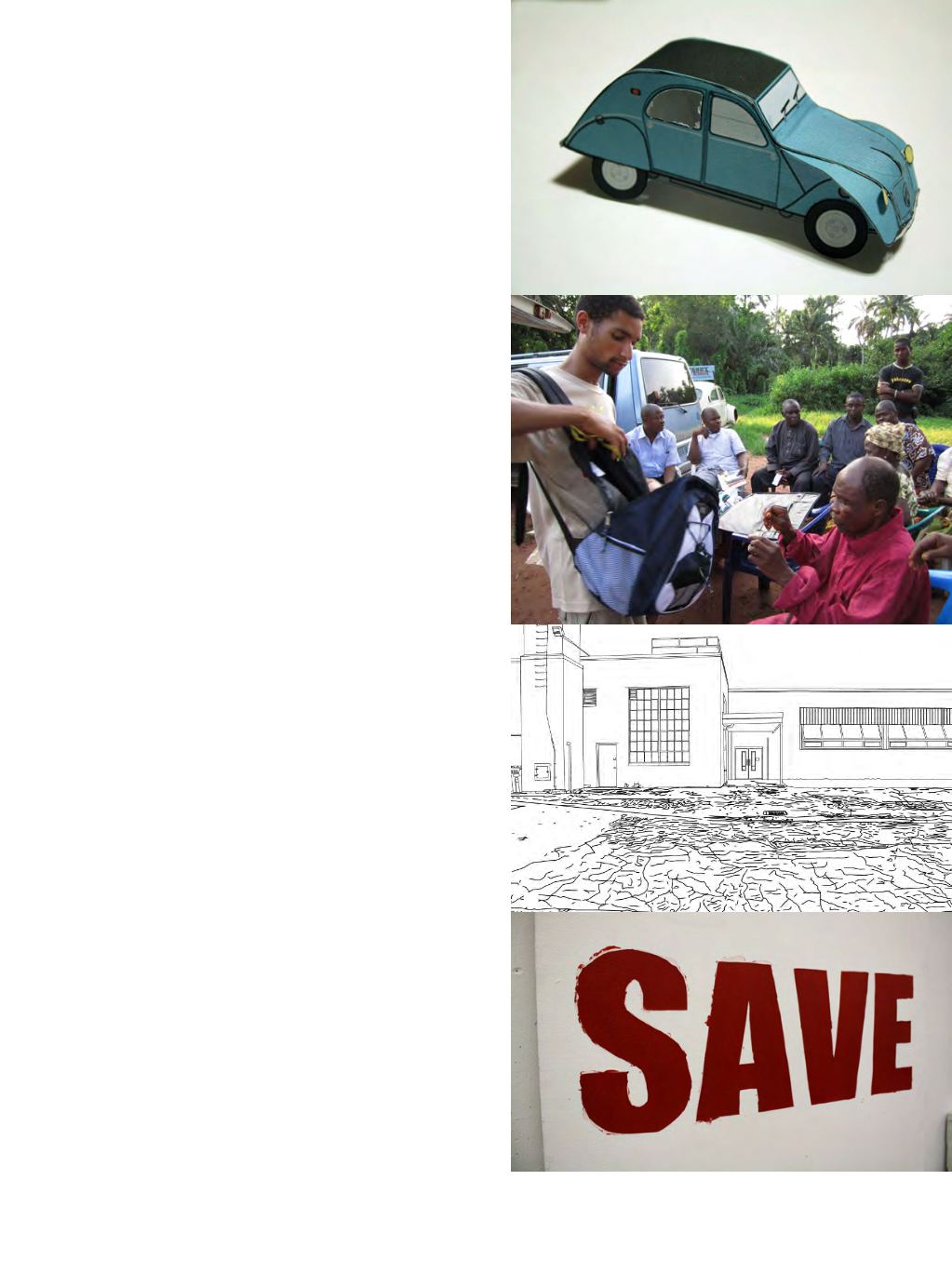
At right:
1. Beckett’s Car With A Broken Window, Paper model 2010.
2. Surlin is shown helping people find the glasses they need for reading and
other activities while in Enugu State, Nigeria AIDS Crisis Response Team.
3. Lebel Drawing Illustration 2010.
4. Save, Acrylic paint on stretched canvas 2009.
Visit Stephen Surlin online at stephensurlin.com
3
4
2
1


